
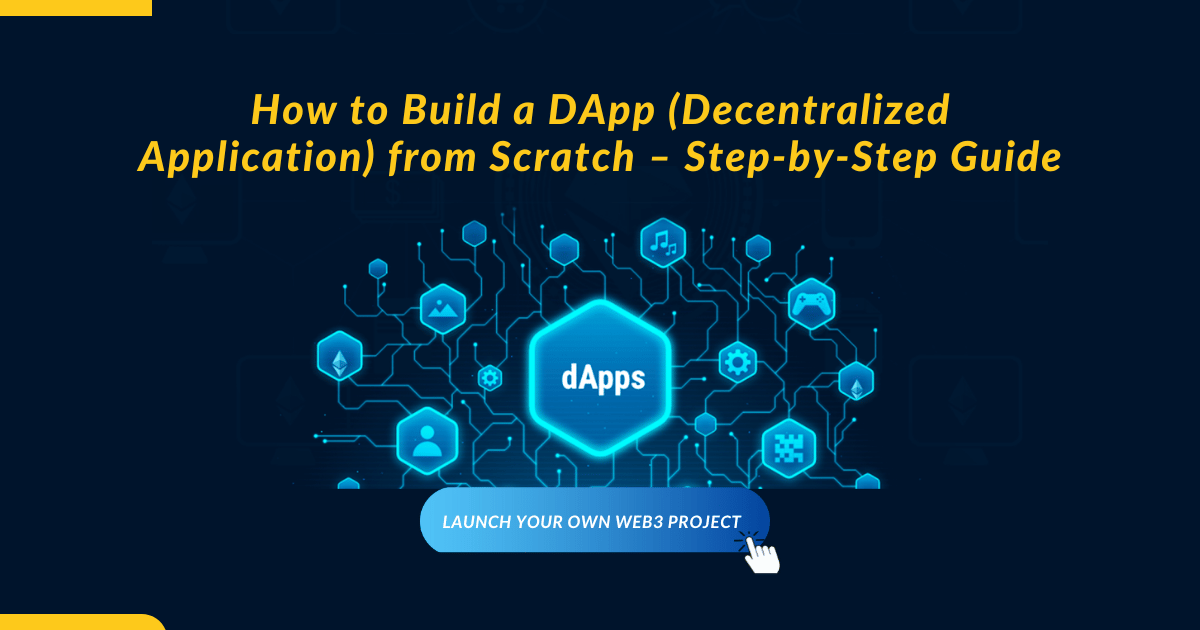
How to Build a DApp (Decentralized Application) from Scratch
The rise of blockchain technology has paved the way for decentralized applications (DApps), offering transparency, security, and user autonomy. If you’re looking to build a DApp from scratch, this guide will walk you through the essential steps to develop a fully functional decentralized application.
What is a DApp?
A Decentralized Application (DApp) is an application that runs on a blockchain network instead of centralized servers. Unlike traditional apps, DApps operate with smart contracts, ensuring transparency and eliminating intermediaries. Popular examples include Uniswap, Aave, and CryptoKitties.
Why Build a DApp?
-
Decentralization – No single point of failure
-
Security – Resistant to hacks and fraud
-
Transparency – Every transaction is recorded on the blockchain
-
User Ownership – No central authority controlling user data
7 Steps to Build a DApp from Scratch
1. Define Your DApp’s Purpose and Use Case
Before diving into development, clearly define your DApp’s goal. Consider:
-
Problem it solves (e.g., financial transactions, NFTs, DeFi lending, gaming)
-
Target audience
-
Blockchain network to use (Ethereum, Solana, Binance Smart Chain, etc.)
2. Choose the Right Blockchain Platform
Different blockchain networks offer unique advantages:
-
Ethereum – Most popular for DApps; supports Solidity smart contracts
-
Binance Smart Chain (BSC) – Lower transaction fees
-
Solana – High-speed transactions with low fees
-
Polygon – Layer-2 scalability for Ethereum-based DApps
Learn more about blockchain networks
3. Develop Smart Contracts
Smart contracts are the backbone of a DApp. They handle logic and execute transactions autonomously.
-
Programming Language: Solidity (Ethereum), Rust (Solana), Vyper (alternative to Solidity)
-
Development Tools: Remix, Hardhat, Truffle
-
Test on Testnet: Before deploying, test contracts on Ethereum’s Ropsten or Goerli testnets
4. Set Up Frontend and Backend (Web3 Integration)
To interact with smart contracts, your DApp needs a user-friendly interface.
-
Frontend: React.js, Vue.js, or Angular
-
Backend: Node.js with Web3.js or Ethers.js
-
Wallet Integration: MetaMask, Trust Wallet
5. Connect Smart Contracts to Frontend (Web3.js)
Use Web3.js or Ethers.js to enable communication between the frontend and blockchain.
const Web3 = require("web3"); const web3 = new Web3("https://mainnet.infura.io/v3/YOUR_INFURA_PROJECT_ID");
6. Test and Deploy Your DApp
Thorough testing ensures a seamless user experience.
Unit Testing: Hardhat, Mocha
Security Audits: Tools like MythX, OpenZeppelin
Deployment: Ethereum Mainnet, Binance Smart Chain, or Polygon
7. Launch and Market Your DApp
Once deployed, promote your DApp effectively:
Create a website and whitepaper
Leverage social media (Twitter, Discord, Telegram)
Submit to DApp directories like DappRadar
“Blockchain is the tech. Bitcoin is merely the first mainstream manifestation of its potential.” – Marc Kenigsberg (Blockchain Influencer & Entrepreneur)
Final Thoughts
Building a DApp from scratch requires a mix of blockchain knowledge, smart contract development, and Web3 integration. As decentralized applications continue to reshape industries, now is the perfect time to explore the future of Web3 development.
📢 Ready to integrate Web3 into your business? Contact Crypto Pulse Tech for expert guidance! 🚀
External Resources:
- Ethereum smart contract documentation: Ethereum Smart Contracts
- Web3.js tutorial: Web3.js Guide





Add comment