
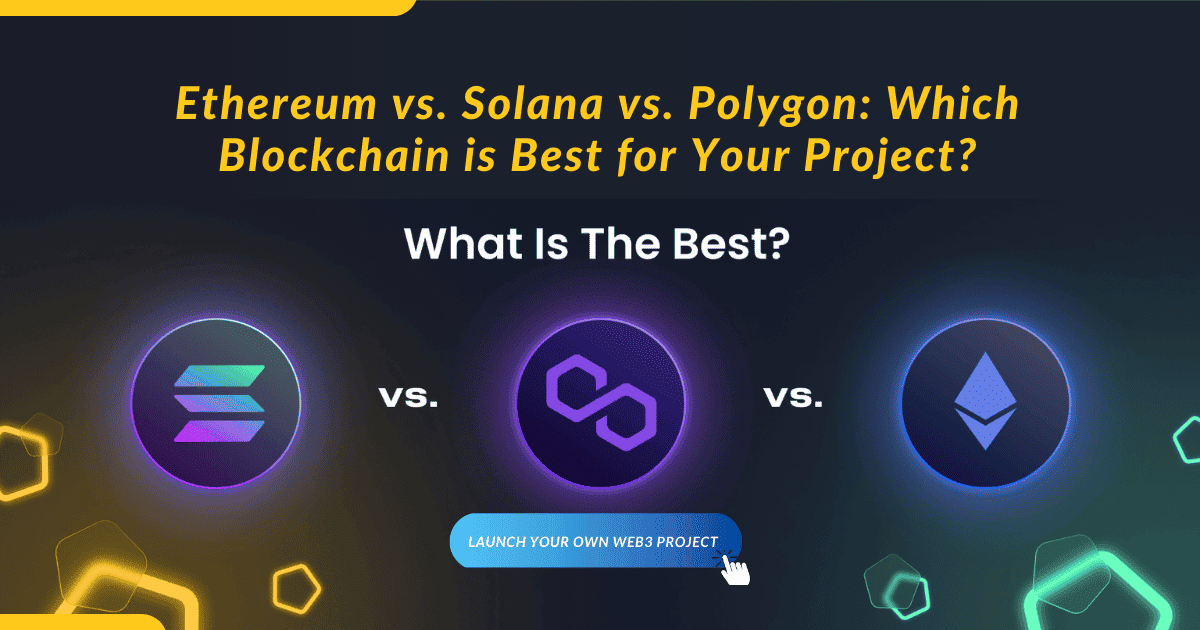
Which Blockchain is Best?
The world of blockchain technology is rapidly evolving, with numerous platforms offering unique features for developers, businesses, and investors. Among the most prominent are Ethereum, Solana, and Polygon—each known for its distinct capabilities in scalability, transaction speed, and security. But which blockchain is the right choice for your project? Let’s break it down.
Ethereum vs. Solana vs. Polygon: A Detailed Comparison
Ethereum: The Pioneer of Smart Contracts
Ethereum is the most established and widely adopted blockchain for decentralized applications (dApps) and smart contracts.
✅ Pros:
-
Decentralization: Highly secure and widely adopted.
-
Smart Contracts: First blockchain to introduce programmable contracts.
-
Robust Developer Community: Backed by extensive resources and support.
❌ Cons:
-
High Gas Fees: Transactions can be expensive due to network congestion.
-
Scalability Issues: Slower transaction speeds compared to newer blockchains.
Best for:
-
DeFi applications
-
NFT marketplaces
-
Enterprise blockchain solutions
🔗 Learn more about Ethereum at ethereum.org
Solana: The High-Speed Contender
Solana is known for its incredible transaction speed and low costs, making it a favorite for projects requiring fast processing.
✅ Pros:
-
Ultra-Fast Transactions: Can handle 65,000 TPS (transactions per second).
-
Low Fees: Significantly lower than Ethereum.
-
Growing Ecosystem: Rapidly expanding DeFi and NFT markets.
❌ Cons:
-
Network Stability Issues: Has faced multiple outages in the past.
-
Less Decentralized: More centralized compared to Ethereum.
Best for:
-
High-frequency trading platforms
-
Gaming & metaverse applications
-
Low-cost DeFi projects
🔗 Explore Solana at solana.com
Polygon: The Layer 2 Scaling Solution
Polygon (formerly Matic) is a Layer 2 solution that enhances Ethereum’s scalability while maintaining security.
✅ Pros:
-
Lower Fees: Much cheaper than Ethereum transactions.
-
Ethereum Compatibility: Seamless integration with Ethereum projects.
-
Strong Developer Support: Large ecosystem with diverse applications.
❌ Cons:
-
Dependent on Ethereum: Not a standalone blockchain.
-
Security Concerns: While secure, it is still considered less secure than Ethereum.
Best for:
-
Scaling existing Ethereum applications
-
NFT projects with lower fees
-
Cross-chain compatibility
🔗 Visit Polygon at polygon.technology
Comparison Table: Ethereum vs. Solana vs. Polygon
| Feature | Ethereum | Solana | Polygon |
|---|---|---|---|
| TPS | ~30 TPS | 65,000 TPS | 7,000 TPS |
| Transaction Fees | High | Low | Very Low |
| Decentralization | High | Moderate | High |
| Best Use Case | DeFi, NFTs, Enterprise | Gaming, High-speed dApps | Ethereum Scaling, NFTs |
Which Blockchain is Right for You?
-
If security and decentralization are your top priorities → Choose Ethereum
-
If high-speed, low-cost transactions are crucial → Choose Solana
-
If you want Ethereum compatibility with lower fees → Choose Polygon
Your project’s needs will ultimately determine the best blockchain. Consider scalability, fees, security, and ecosystem support before making a decision.
Final Verdict: Which Blockchain Should You Choose?
-
Go for Ethereum if you prioritize security, decentralization, and extensive developer support.
-
Choose Solana if you need high-speed, low-cost transactions for gaming, NFTs, and DeFi.
-
Opt for Polygon if you want an affordable, scalable solution while leveraging Ethereum’s ecosystem.
Conclusion
Ethereum, Solana, and Polygon each offer unique advantages. The best blockchain depends on your project’s needs, whether it’s speed, security, or cost-effectiveness. Stay updated on blockchain developments to make the most informed choice.
“The future of money is digital currency.” – Bill Gates
📢 Ready to integrate Web3 into your business? Contact Crypto Pulse Tech for expert guidance! 🚀






Add comment